
Understanding Bendable Profile Light and Its Applications
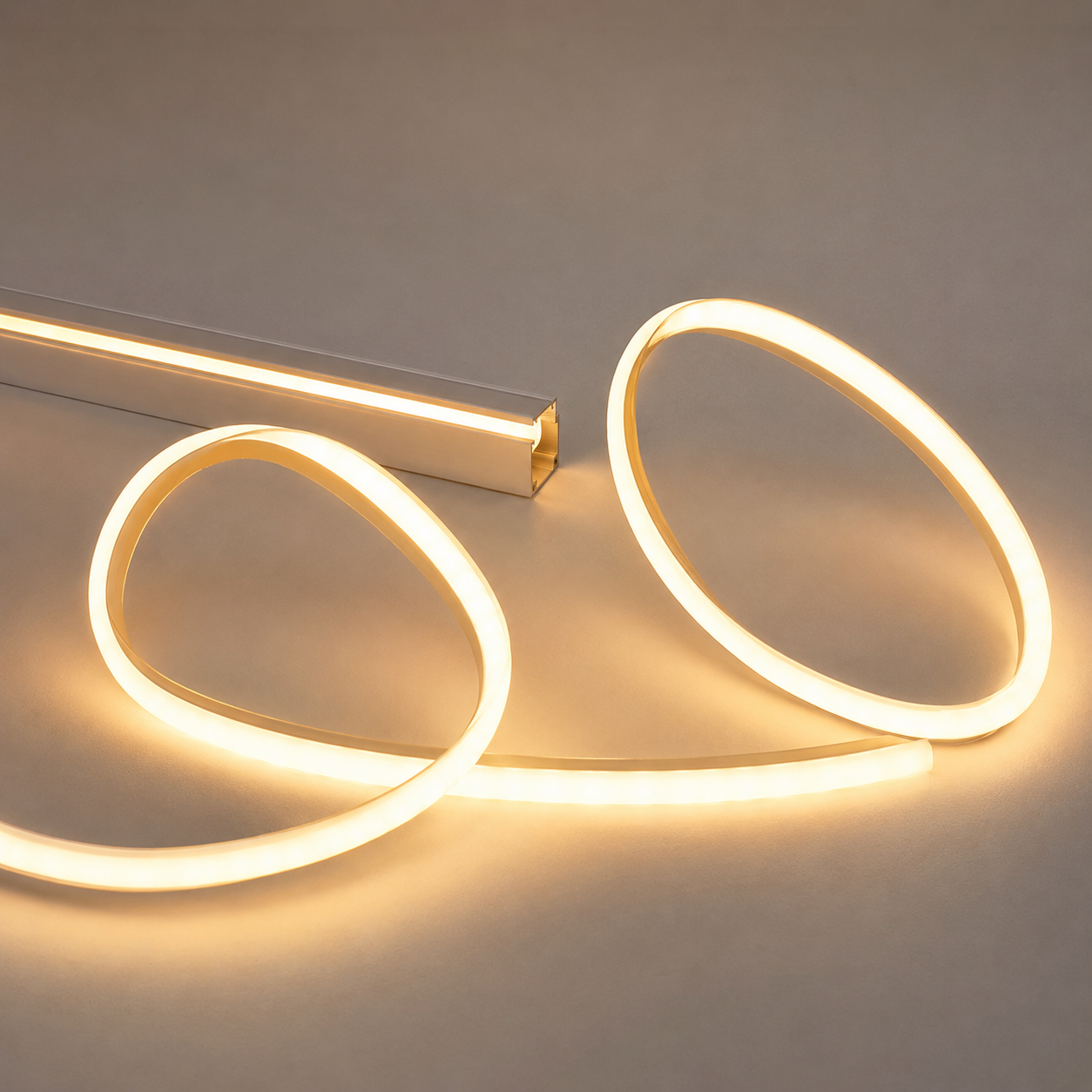
A Bendable Profile Light is a versatile linear LED lighting solution designed for curved, circular, arched, and other irregular surfaces where conventional rigid profiles may not achieve the required shape. Depending on the design, the profile may feature flexible sections, engineered grooves, or a bendable aluminium construction that allows it to follow specific curves while securely holding the LED strip and diffuser. Selecting the correct profile requires consideration of the required curve, bending direction, and minimum bending radius.
Beyond creating decorative curved lighting effects, a bendable profile provides important functional support for the LED system. It creates a defined channel for installing the LED strip, helps protect the light source, supports diffuser placement, and can contribute to heat management when aluminium is used. This makes the profile suitable for applications where both visual continuity and reliable LED installation are important.
The overall performance of a Bendable Profile Light depends on several technical factors, including profile material, LED strip specifications, diffuser type, bending radius, mounting method, ventilation, and operating temperature. Proper selection and installation help maintain an even lighting appearance while supporting the durability and performance of the LED system. For curved architectural lighting, furniture applications, display features, and customised interior installations, matching the profile to the specific surface and lighting requirement is essential.
Understanding Flexible Linear Lighting Solutions
Saffron approaches Bendable Profile Light solutions with a focus on application-specific requirements rather than treating the profile as a purely decorative element. The right profile should be selected according to the required curve, minimum bending radius, LED strip dimensions, diffuser specification, profile construction, heat dissipation, mounting method, and installation environment. Evaluating these factors together helps ensure the profile follows the intended design while providing secure LED strip support and consistent lighting performance.
Different projects can have different technical requirements depending on the surface, curve, lighting effect, and installation conditions. Interior designers, architects, lighting professionals, OEMs, and project contractors can review profile dimensions, bending direction, diffuser compatibility, LED specifications, electrical connections, and mounting arrangements before finalising the product. This application-focused evaluation helps identify compatibility issues early and supports smoother installation across customised curved lighting projects.
Sample testing and dimensional verification can further improve product selection before production or installation begins. Checking the actual bending radius, LED strip fit, diffuser installation, mounting method, and thermal conditions provides a practical way to confirm whether the selected profile meets the project's requirements. Saffron's specification-led approach supports more predictable installation, better product suitability, and reliable performance across architectural, commercial, furniture, display, and other curved lighting applications.
How Bendable Profile Light Works in Curved Lighting Applications
A conventional aluminium LED profile is typically manufactured for straight-line installations, while a flexible or bendable profile is designed to accommodate controlled curves and shaped surfaces. Depending on its construction, flexibility may be achieved through segmented sections, perforated areas, flexible joints, or a specially engineered channel structure. Despite its ability to bend, the profile must continue to provide secure support for the LED strip and diffuser, helping maintain a neat appearance and stable lighting installation.
The bending performance of an LED profile depends on its specific design and construction. Some profiles are intended for particular bending directions, while others may support specific curved applications based on their structure. The LED strip dimensions, diffuser type, profile material, and installation method should also be considered to ensure the complete lighting assembly remains properly aligned and securely installed along the required curve.
A defined minimum bending radius is an important specification that should be checked before installation. Bending the profile beyond its recommended limit can cause deformation, diffuser misalignment, excessive stress on the LED strip, or an uneven finished appearance. Following the manufacturer's bending direction and radius specifications helps maintain the structural integrity of the profile while supporting consistent illumination and a clean finish across curved lighting applications.
Key Benefits for Curved and Custom Lighting Designs
A Bendable Profile Light offers greater design flexibility for curved and non-linear lighting installations where traditional rigid aluminium profiles may not be appropriate. Depending on the construction, the profile can be shaped around arcs, columns, arches, curved ceilings, circular features, waves, and other customised architectural forms. When paired with a suitable diffuser, it can create a smoother and more continuous light appearance by helping reduce the visibility of individual LED points. The final lighting effect, however, depends on factors such as LED density, diffuser design, profile depth, and viewing distance.
Aluminium construction can provide reliable mechanical support for the LED strip while also helping transfer heat away from the light source. Effective thermal performance depends on the profile dimensions, LED strip power consumption, installation method, ventilation, and surrounding temperature. These factors become particularly important when higher-power LED strips are used, as selecting an appropriately sized profile can help maintain stable operating conditions and support the longevity of the lighting system.
Flexible profile lighting gives architects, interior designers, and lighting professionals greater freedom to integrate illumination with complex architectural forms. However, the profile should always be selected according to its bending direction, minimum bending radius, diffuser compatibility, LED strip specifications, mounting requirements, and thermal conditions. Considering these technical aspects during planning helps maintain installation stability, consistent lighting quality, and a clean finished appearance across customised curved lighting applications.
Step-by-Step Installation Process for Bendable Profile Light
Step 1 Measure the CurveMeasure the installation surface and identify the required curve, radius, or shape before starting. A drawing or full-size template can help confirm that the planned geometry is achievable.
Step 2 Verify Profile CompatibilityCheck the Bendable Profile Light for its bending direction, minimum radius, channel dimensions, diffuser compatibility, and LED strip requirements. These specifications help prevent installation problems later.
Step 3 Prepare the SurfaceMark the lighting path accurately and prepare the ceiling, wall, furniture, or architectural surface. For recessed applications, the groove or opening should match the profile dimensions.
Step 4 Form the Profile CarefullyBend the profile gradually along the planned curve instead of applying excessive force at a single point. Controlled forming helps maintain the profile shape and diffuser alignment.
Step 5 Secure the ProfileFix the profile using a suitable mounting method and maintain consistent fixing intervals. Proper support helps prevent movement, distortion, or an uneven lighting line after installation.
Step 6 Install the LED StripClean the channel and position the LED strip evenly inside the profile. Ensure electrical connections, strip polarity, and driver requirements are correctly coordinated before final assembly.
Step 7 Fit the Diffuser and TestInstall the diffuser after checking strip alignment and profile shape. Test illumination, electrical operation, dimming where applicable, and light uniformity before completing the installation.
Application-Focused Approach to LED Lighting
Saffron takes an application-focused approach to LED lighting, with attention to product specifications, installation conditions, optical performance, and project requirements. For a Bendable Profile Light, factors such as bending direction, minimum radius, profile dimensions, diffuser compatibility, LED strip requirements, thermal conditions, and mounting method should be considered together to achieve a suitable installation.
Technical understanding is also important when working on curved, architectural, and customized lighting projects. Clear specification review, practical product selection, compatibility checks, and installation planning can help reduce avoidable issues during execution. This approach supports more consistent lighting results while helping customers select solutions according to their actual design and performance requirements.
Bendable Profile Light for Creative and Flexible Lighting Solutions
Saffron follows a practical, application-focused approach to LED lighting, with attention to the technical requirements behind each installation. Product selection can be guided by factors such as lighting purpose, optical performance, electrical compatibility, installation conditions, thermal requirements, profile dimensions, diffuser selection, and expected operating environment. This helps ensure that lighting components are considered as part of the complete system rather than selected only on appearance or nominal specifications.
Project requirements can vary significantly between residential interiors, commercial spaces, retail displays, architectural features, and customized installations. Clear technical communication, suitable product selection, sample evaluation, and consideration of installation requirements can help reduce avoidable issues during execution. A specification-led approach also supports better planning, consistent lighting results, and more dependable performance over the expected service period.