
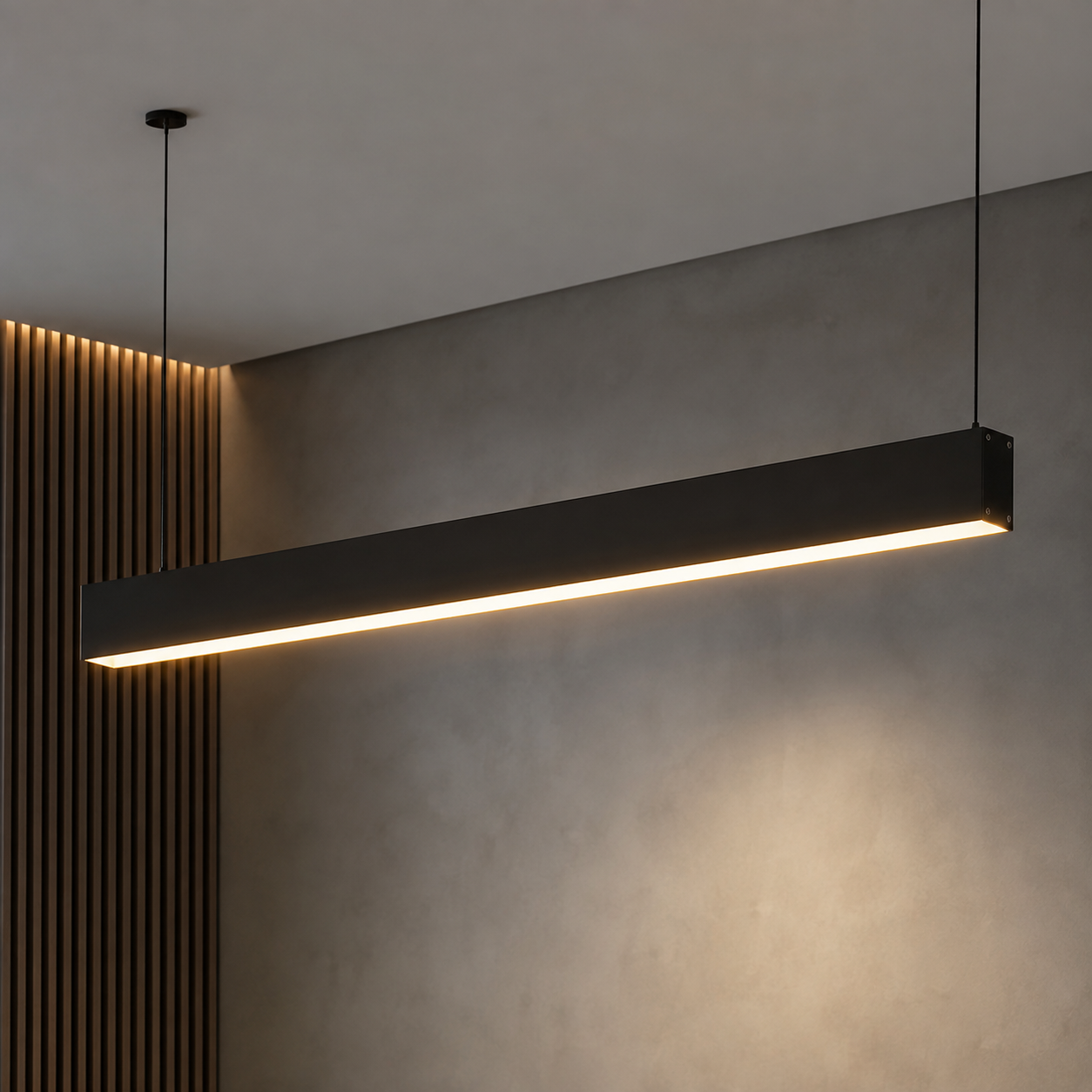
Hanging Linear Light for Modern Interior Lighting
A Hanging Linear Light is a suspended LED fixture designed to provide extended, controlled illumination across a defined area rather than concentrating light at a single point. It is commonly used above workstations, conference tables, reception counters, dining areas, corridors, retail displays, and open commercial spaces. The suspended installation allows the fixture height and position to be planned according to the ceiling structure, working surface, room dimensions, and required lighting distribution.
Selecting a suitable suspended linear fixture requires more than comparing wattage or appearance. Fixture length, lumen output, efficacy, beam distribution, color temperature, CRI, glare control, driver compatibility, suspension method, mounting height, and operating conditions should be evaluated together. Proper spacing and positioning are also important because they influence uniformity, visual comfort, and the amount of light reaching the intended working area. Reviewing these technical factors before installation helps achieve consistent illumination and dependable long-term performance .
Application-Focused Approach to Linear LED Lighting
Saffron takes an application-focused approach to suspended LED lighting, considering optical performance, electrical compatibility, installation requirements, and architectural integration as connected factors. A Hanging Linear Light should be specified according to the space, ceiling height, required illumination, fixture dimensions, mounting position, and intended lighting effect. Reviewing these requirements early helps ensure that the selected fixture is suitable for both the visual design and functional needs of the project.
Project-based lighting specifications may also require careful evaluation of lumen output, color temperature, CRI, diffuser characteristics, beam distribution, driver configuration, suspension hardware, and operating conditions. The ceiling structure and available mounting points should be assessed before installation, while maintenance access and electrical connections should also be considered for long-term practicality. This structured approach helps support consistent illumination, secure installation, and dependable performance during regular operation.
How Hanging Linear Light Works and Distributes Illumination
A suspended linear LED system typically consists of an LED source, housing, optical diffuser or lens, driver, suspension components, and electrical connections. The housing provides mechanical support and helps protect the internal components, while the diffuser or lens controls the direction, spread, and visual quality of the emitted light. The driver regulates the electrical supply required by the LED system and should be selected according to the fixture's electrical specifications and operating conditions.
The suspension arrangement allows the fixture to be positioned at a planned height below the ceiling, which can help improve light distribution over work areas and interior zones. Depending on the optical design, the luminaire may provide direct illumination toward the workplane or a combination of direct and indirect lighting, with some light directed toward the ceiling. Selection should consider mounting height, room dimensions, ceiling reflectance, required illumination, glare control, and the intended use of the space to achieve suitable visual comfort and consistent lighting performance.
Different Types of Suspended Linear Lighting Systems
Hanging linear fixtures are available in different configurations to suit ceiling conditions, lighting requirements, and interior layouts. Hanging Linear Light systems can be designed for direct illumination, direct-indirect lighting, continuous linear arrangements, or decorative applications. The appropriate configuration depends on factors such as fixture length, lumen output, beam distribution, suspension height, color characteristics, and the intended use of the space.
Direct Lighting FixturesThese fixtures direct most of the light downward toward workstations, tables, counters, and other working areas. They are suitable where focused and practical illumination is required.
Direct-Indirect Lighting FixturesThese designs distribute light both downward and upward. The upward component can illuminate the ceiling and surrounding surfaces, while the downward component provides task lighting. This configuration can support a more balanced visual environment.
Continuous Linear SystemsMultiple linear fixtures can be arranged in a continuous row to create longer lighting lines across offices, retail areas, corridors, and large commercial interiors. Consistent spacing and alignment are important for achieving uniform illumination.
Decorative Linear FixturesThese designs combine functional lighting with a stronger visual design element. They can be used in reception areas, hospitality spaces, dining environments, meeting rooms, and contemporary interiors where the fixture contributes to the overall appearance.
Key Advantages of Hanging Linear Light for Modern Interiors
Suspended linear lighting can provide broad and consistent illumination across workstations, conference tables, counters, corridors, retail displays, and open commercial areas. The longer fixture format helps distribute light across a wider area compared with smaller point-based fixtures, while suspension allows the mounting height to be adjusted according to ceiling conditions and the required workplane. Depending on the optical design, direct or direct-indirect distribution can also be used to support different lighting requirements and improve visual balance within a space.
Another benefit is the flexibility available in fixture length, layout, light distribution, color temperature, and installation arrangement. Properly selected systems can contribute to a cleaner ceiling appearance while supporting functional illumination for offices, hospitality areas, educational spaces, retail environments, and architectural interiors. Features such as efficient LED sources, suitable diffusers, glare control, reliable drivers, and well-designed suspension hardware can further support energy-conscious operation, visual comfort, installation stability, and dependable long-term performance
Step-by-Step Guide to Selecting the Right Suspended Lighting
Step 1 Define the Lighting PurposeIdentify whether a Hanging Linear Light is required for general illumination, task lighting, decorative lighting, or zone-based lighting. The intended purpose helps determine the required lumen output, beam distribution, mounting height, and overall lighting configuration.
Step 2 Assess the SpaceReview ceiling height, room dimensions, furniture layout, workplane height, partitions, wall finishes, and available daylight. These factors influence fixture position, spacing, and lumen requirements.
Step 3 Choose the Light DistributionSelect direct, indirect, direct-indirect, or diffused distribution according to the area being illuminated and the required visual comfort. Beam control and glare performance should also be considered.
Step 4 Select Fixture Length and LayoutMatch the fixture length with the room dimensions, furniture arrangement, and illuminated area. Multiple fixtures should be planned for consistent spacing, alignment, and uniform light distribution.
Step 5 Check Electrical SpecificationsVerify wattage, lumen output, input voltage, driver type, color temperature, CRI, dimming requirements, and control compatibility. All specifications should match the project's electrical requirements.
Step 6 Plan the Suspension SystemDetermine suspension points, cable or rod length, mounting hardware, and required fixture height. Equal suspension lengths are important for keeping the luminaire level and visually aligned.
Step 7 Verify the Supporting StructureCheck whether the ceiling or supporting surface can safely accommodate the fixture and suspension hardware. Anchors, brackets, cables, and safety components should be suitable for the installation conditions.
Step 8 Install and Level the FixtureSecure the suspension system before mounting the fixture. Carefully level the luminaire and maintain consistent height and alignment, particularly when installing multiple units.
Step 9 Test the Lighting PerformanceCheck illumination, glare, color consistency, dimming operation, alignment, shadows, and electrical performance after installation. A sample installation can be useful for larger projects before completing the full deployment.
Lighting Solutions Built Around Real Application Requirements
Saffron focuses on application-specific LED lighting requirements by considering optical performance, electrical specifications, installation conditions, and the intended use of each space. A Hanging Linear Light can be evaluated according to fixture length, lumen output, color temperature, CRI, beam distribution, glare control, driver configuration, suspension method, and mounting height. Reviewing these factors together helps ensure that the selected lighting system is suitable for both functional requirements and architectural design.
Project requirements can vary significantly between offices, retail spaces, hospitality areas, educational facilities, workstations, and commercial interiors. Saffron considers these differences while assessing product configuration, compatibility, installation practicality, and expected operating conditions. This technical and project-focused approach supports better specification decisions, consistent illumination, easier installation planning, and dependable lighting performance over regular use.
Hanging Linear Light for Efficient and Well-Designed Illumination
A Hanging Linear Light can provide broad, controlled illumination while adding a clean architectural element to modern interiors. Its effectiveness depends on selecting the appropriate fixture length, lumen output, light distribution, color temperature, CRI, glare control, driver, and suspension arrangement according to the application. Proper positioning and installation are equally important for achieving consistent illumination and maintaining visual comfort.
Successful lighting selection should therefore consider both performance and installation requirements rather than appearance alone. Room dimensions, ceiling height, workplane, electrical conditions, supporting structure, maintenance access, and expected operating conditions should be reviewed before final specification. A structured selection and testing process can help achieve reliable performance, practical installation, and a lighting solution suited to the long-term requirements of the space.