
Profile Light for Modern Interior Lighting
A Profile Light is a linear LED lighting system that houses an LED strip or module inside a dedicated channel, usually covered with a diffuser or optical lens. The profile creates a stable mounting surface, protects the light source from physical contact, and helps control how light is distributed. Aluminium profiles can also assist with heat dissipation, although thermal performance depends on the profile dimensions, LED power, installation method, and surrounding conditions.
Profile lighting can be used for general illumination, accent lighting, architectural details, furniture, display units, ceiling features, wall elements, and decorative installations. Selecting the right configuration requires consideration of LED strip type, required lumen output, profile size, diffuser material, beam or light distribution, mounting position, electrical compatibility, and thermal requirements. Matching these technical factors to the application helps achieve more uniform lighting, a cleaner finished appearance, and dependable performance over regular use.
The Working Process of Modern Linear Lighting Systems
A Profile Light combines an LED strip or module, a dedicated mounting channel, and usually a diffuser or optical cover to create a controlled linear lighting system. The LED provides the illumination, while the profile supports and protects the strip and helps maintain proper positioning. In aluminium designs, the profile can also assist with heat transfer during operation, although actual thermal performance depends on profile size, LED power, installation method, and surrounding conditions.
The profile and LED strip should be selected as a complete lighting assembly rather than as separate components. Important factors include strip width, power consumption per metre, LED density, profile depth, diffuser characteristics, operating temperature, mounting position, and available ventilation. Matching these specifications helps achieve suitable light distribution, better LED protection, consistent appearance, and reliable performance during regular operation.
Profile Light for Professional and Architectural Lighting
Profile lighting is used in professional projects to create a cleaner, continuous linear lighting effect while keeping the LED strip protected and properly positioned. The channel provides a consistent mounting surface and, when paired with a suitable diffuser, can help improve light appearance and reduce visible LED points. For larger installations, using defined profile dimensions and installation methods can also help maintain more uniform lighting lines across different sections.
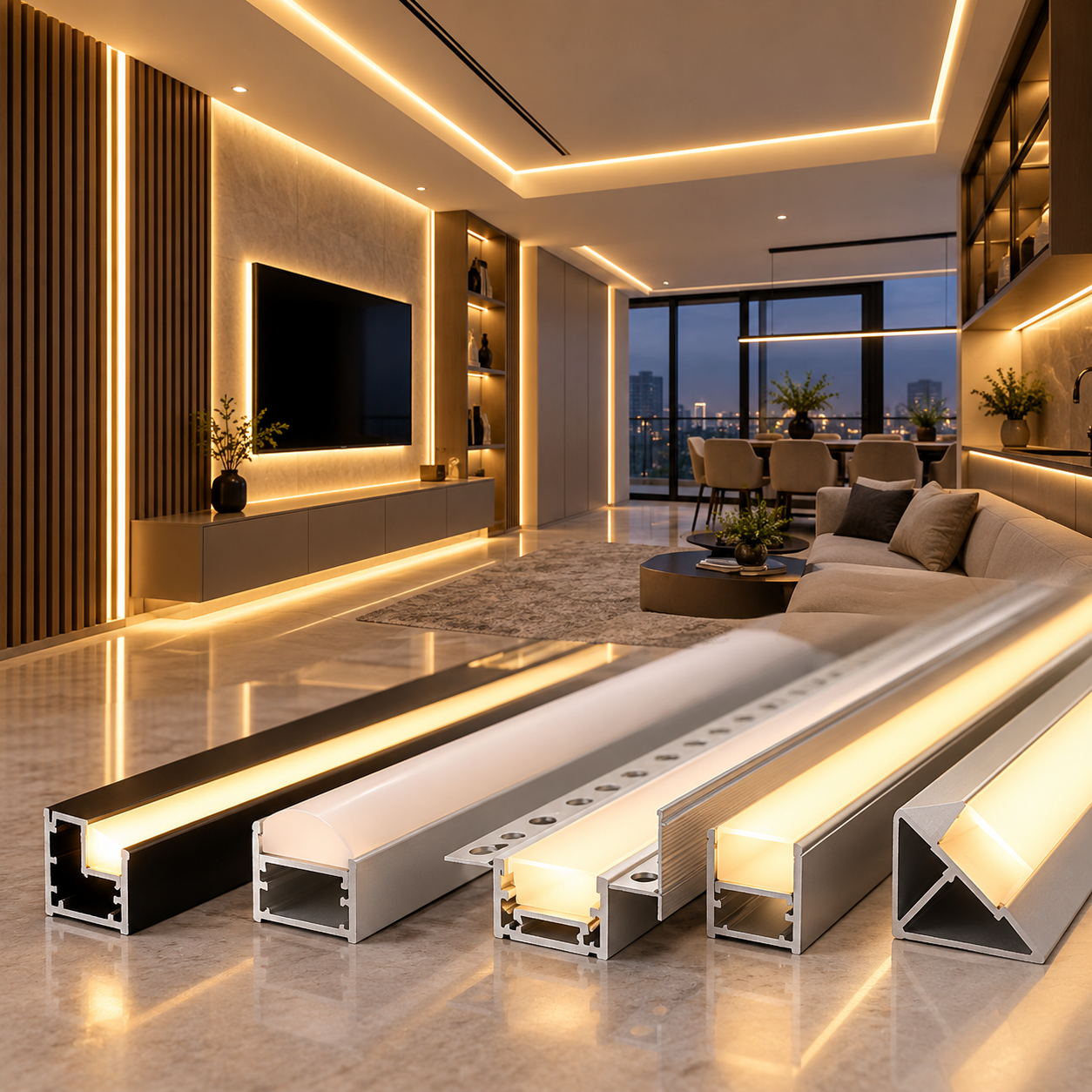
The system can be adapted to various architectural elements, including ceilings, walls, cabinets, wardrobes, shelving, furniture, stairs, and display units. Surface-mounted, recessed, corner, suspended, and flexible configurations offer different installation options depending on the structure and design requirement. Selection should consider profile dimensions, LED strip compatibility, diffuser type, heat management, mounting conditions, and the desired lighting effect for the completed installation.
Types of Linear Lighting for Different Installations
Surface Mounted LightingA surface-mounted profile is fixed directly onto the installation surface, making it useful where cutting or recessing is not practical. Common applications include cabinets, furniture, shelves, wardrobes, display units, and retrofit projects.
Recessed LightingA recessed profile is fitted into a prepared channel so the lighting sits flush or nearly flush with the surrounding surface. This approach creates a more integrated appearance and is often suitable for ceilings, walls, furniture, and architectural details.
Corner LightingCorner profiles are designed to position light at an angle, making them useful at cabinet edges, shelving, wall junctions, and furniture corners. The profile geometry should be selected according to the required light direction and installation space.
Suspended LightingSuspended profiles are mounted below the ceiling using suitable suspension hardware. Depending on the optical design, they can provide direct, indirect, or combined illumination for offices, retail areas, commercial interiors, and other larger spaces.
Bendable LightingA profile light with a bendable construction can follow curved surfaces where rigid channels are unsuitable. These profiles can be used for arches, columns, circular features, curved ceilings, and custom shapes, provided the required bending direction and minimum radius are within the manufacturer's specifications.
Step-by-Step Process for Selecting the Right Profile Light
Step 1 Define the Lighting RequirementIdentify whether the lighting is intended for ambient, task, accent, display, furniture, or architectural use. This determines the required light distribution, brightness, and installation style.
Step 2 Select the Suitable LED StripCheck voltage, wattage per metre, strip width, LED density, lumen output, color temperature, and CRI. These specifications should form the basis for selecting a compatible lighting profile.
Step 3 Confirm Profile DimensionsMeasure the internal channel width and depth to ensure the LED strip fits correctly. Sufficient space should also be considered for wiring, connectors, diffuser placement, and heat management.
Step 4 Choose the Right DiffuserSelect the diffuser based on light transmission, dot visibility, glare control, and the desired visual effect. Testing the diffuser with the chosen LED strip can provide a more accurate indication of the final appearance.
Step 5 Evaluate Thermal ConditionsConsider LED power, operating hours, ambient temperature, profile size, and installation method. Recessed or enclosed applications require particular attention to heat dissipation and available ventilation.
Step 6 Confirm the Installation MethodDecide whether surface-mounted, recessed, corner, suspended, or flexible installation is required. Check mounting accessories, fixing methods, cable routing, and access for future maintenance.
Step 7 Test the Complete AssemblyFor larger or technically demanding projects, test the LED strip, profile, diffuser, and driver together before full installation. Check light uniformity, color appearance, glare, operating temperature, and physical fit to identify issues early.
Application-Focused Approach to Lighting Solutions
Saffron follows an application-focused approach to LED lighting, with attention to product specifications, installation requirements, optical performance, electrical compatibility, and project conditions. The selection process considers the complete lighting assembly rather than relying only on appearance or wattage. This practical approach can help identify suitable components for residential interiors, commercial spaces, retail displays, furniture lighting, and architectural projects.
For projects requiring a Profile Light, factors such as LED strip compatibility, profile dimensions, diffuser selection, thermal conditions, mounting method, and expected operating hours can be reviewed before specification. Clear technical understanding, product evaluation, and attention to installation details can help reduce compatibility issues, support consistent lighting results, and improve the reliability of the completed system.
Profile Light for Clean and Flexible LED Lighting Solutions
A Profile Light can provide a structured approach to linear LED illumination while protecting the LED strip and supporting a cleaner finished appearance. Different configurations, including surface-mounted, recessed, corner, suspended, and bendable designs, allow the lighting system to be adapted to various architectural, furniture, commercial, and residential applications.
Effective selection should consider the complete lighting assembly rather than the profile alone. LED strip specifications, profile dimensions, diffuser characteristics, thermal conditions, installation method, electrical compatibility, and the intended lighting effect should be evaluated together. Proper planning and testing can help achieve consistent illumination and dependable long-term performance.