
Suspended Drum Light for Functional and Contemporary Spaces
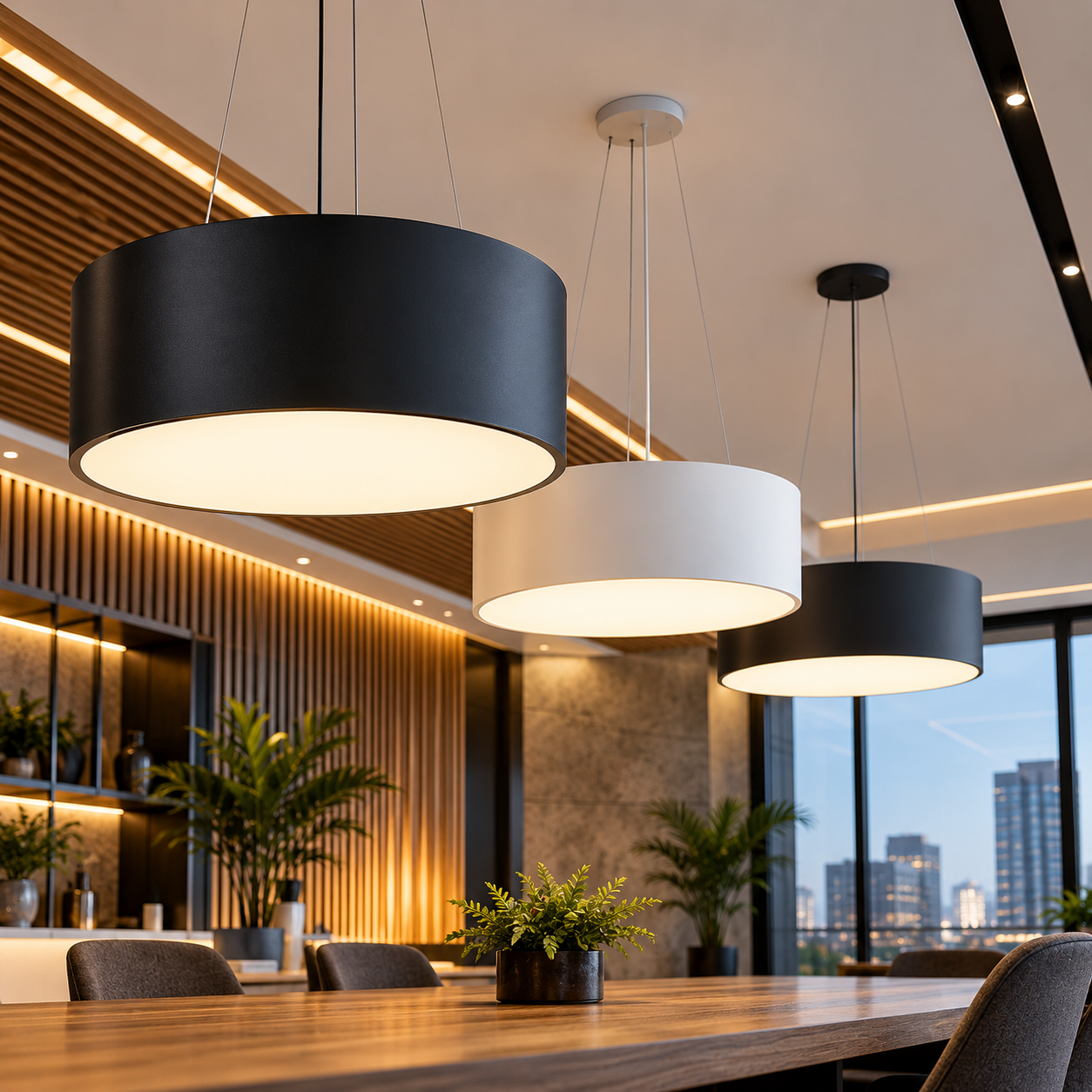
A Suspended Drum Light is a circular or drum-shaped LED luminaire suspended below the ceiling using cables, rods, or other suitable mounting systems. The suspended position allows fixture height and placement to be adjusted according to ceiling height, room layout, and required lighting distribution.
The fixture can provide direct, indirect, or direct-indirect illumination depending on its optical design. Key specifications such as aluminium housing, diffuser type, LED output, color temperature, suspension system, driver compatibility, and control options should be evaluated together to achieve suitable illumination, visual comfort, and reliable performance.
How Suspension Height Influences Light Distribution
The suspension height of a Suspended Drum Light directly affects light distribution, perceived brightness, glare, and the visual relationship between the fixture and surrounding furniture. Positioning the luminaire too high or too low can alter the effective illuminated area and overall lighting balance.
The appropriate height should be determined by ceiling height, room dimensions, furniture layout, fixture optics, required illumination, and viewing angles. Adjustable suspension systems can help installers level and position the fixture accurately during installation and commissioning.
Suspended Drum Light Construction and Key Components
LED Light SourceThe LED source determines lumen output, color temperature, CRI, efficiency, and operating performance. Selection should match the intended application and required illumination rather than relying only on wattage.
Drum HousingThe housing provides structural support and protects internal components. Aluminium offers lightweight construction and can assist thermal management when appropriately designed.
Diffuser and Optical SystemThe diffuser influences light transmission, uniformity, distribution, and glare control. Opal, acrylic, PMMA, and microprismatic options provide different optical characteristics.
LED DriverThe driver regulates power supplied to the LEDs. Efficiency, stability, dimming compatibility, protection, and accessibility should be checked, particularly when using DALI, 1–10 V, or other control systems.
Suspension SystemCables, rods, canopies, connectors, and levelling hardware support the fixture and determine its height. Correct positioning and equal suspension lengths help maintain secure mounting, accurate alignment, and a level installation.
Key Advantages of Modern Suspended LED Fixtures
A Suspended Drum Light can provide broad, controlled illumination while adding a visible architectural element to the ceiling. Its suspended position allows the fixture height to be planned according to ceiling height, furniture layout, workplane, and required light distribution. Direct, indirect, or combined optical configurations can support different interior lighting requirements.
Suspended installation also offers flexibility in positioning, alignment, and visual integration. Features such as efficient LED sources, suitable diffusers, reliable drivers, adjustable suspension systems, and compatible lighting controls can support visual comfort, uniform illumination, installation stability, and dependable long-term performance across residential, commercial, hospitality, and retail applications.
Step-by-Step Guide to Selecting the Right Suspended Drum Light
Step 1 Identify the Lighting PurposeDefine whether the fixture is needed for general, task, decorative, or zone lighting. This establishes the required lumen output and optical performance.
Step 2 Study the Ceiling and RoomReview ceiling height, room dimensions, furniture placement, electrical access, structural support, and suitable suspension points before selecting the fixture.
Step 3 Determine the Fixture DiameterChoose a diameter that is proportionate to the room and furniture below it. Physical dimensions and visual scale should both be considered.
Step 4 Select the Light OutputDetermine the required lumen output based on room function and the number of fixtures. Wattage alone should not be used to assess lighting performance.
Step 5 Choose the Optical DistributionSelect direct, indirect, or direct-indirect illumination according to the application. Photometric data can help verify expected light distribution for detailed projects.
Step 6 Select Color Temperature and CRIChoose CCT and CRI based on the visual requirements of workspaces, retail, hospitality, residential, or other interior environments.
Step 7 Check Driver and Control CompatibilityVerify driver specifications and compatibility with dimming, DALI, 1–10 V, smart controls, or other required systems before installation.
Step 8 Plan the SuspensionDetermine suspension length and fixing positions according to fixture dimensions and ceiling structure. Properly positioned suspension points help maintain secure, level, and accurately aligned installation.
Suspended Drum Light for Flexible and Controlled Lighting Solutions
A Suspended Drum Light combines controlled illumination with a visible architectural form, making it suitable for residential, commercial, hospitality, retail, and workspace applications. Its performance depends on factors such as LED output, optical distribution, diffuser quality, driver compatibility, and suspension design.
Selecting the fixture according to room dimensions, ceiling height, required illumination, color characteristics, mounting conditions, and control requirements can support reliable performance. Proper suspension planning and installation also help maintain accurate alignment, visual comfort, and consistent lighting.